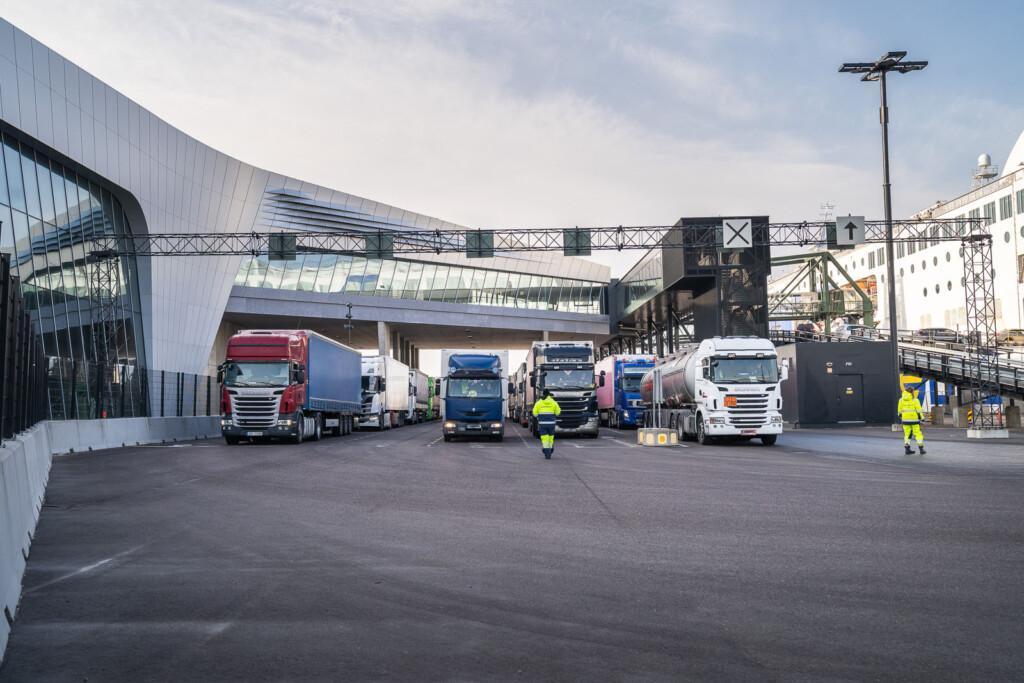
Eckerö Line is a multi-service company founded in 1994, operating the ships M/S Finlandia and Finbo Cargo. They offer high-quality travel packages, retail and restaurant services, meeting and group products, hotel packages, and freight services. Their mission is to be the most enjoyable ship on the Tallinn route, providing the best service, highest quality food, and most diverse entertainment on the Baltic Sea.
The Need for Implementing the OKR Model
Eckerö Line needed a clear way to turn its new strategy into action and track progress. OKRs provided a framework for connecting goals across different timeframes.
North Star objectives defined the long-term direction. Annual objectives focused on medium-term priorities, while quarterly objectives guided shorter-term action. The framework made progress more transparent and helped align the organisation around shared goals.
The OKR model helps us bring the strategy concretely into everyday life and provides us with tools to clearly and systematically track the achievement of goals.
summarizes Eckerö Line’s CEO Taru Keronen
With the OKR model, Eckerö Line can set goals across different timeframes and monitor their achievement. One of the key themes in the new strategy is responsibility, which is strongly reflected in Eckerö Line’s goals and key results. Responsibility is also reflected in day-to-day operations. Goals cover areas such as energy and water consumption, waste and food waste, and employee wellbeing. OKRs also encourage teams and employees to take an active role in achieving strategic goals.
Building Commitment Through Training and Pilots
OKR implementation began in autumn 2023 with strong support from Eckerö Line’s management. The first step was training the entire management team.
The training combined OKR theory with practical exercises. The participants also built a shared understanding of why the framework had been chosen and what Eckerö Line wanted to achieve with it. Taskmill’s experts also took time to understand Eckerö Line’s operations in depth. Ship visits provided valuable insight into day-to-day work and its practical challenges.
“Getting to know Eckerö Line’s operations in-depth was a unique experience and helped us OKR coaches understand the organization’s operations and challenges in practice. It has had a significant impact on the successful start of the change,” explains Taskmill’s Organizational Coach Elina Jolma.
After the management training, annual goals were set in the OKR format, considering dependencies and risks. Taskmill and Eckerö Line also created a roadmap for the rollout. It defined how the new approach would be introduced across the organisation step by step.
“Taskmill’s coaches challenged us to focus on the essentials and helped clarify our goals. Thanks to their support, we were able to proceed systematically and achieve concrete results,” says Eckerö Line’s CEO Taru Keronen.
After the management training, supervisors and experts were also trained. Over 100 people participated in the training sessions for supervisors and experts, demonstrating Eckerö Line’s commitment and investment in implementing the model. At the same time, pilot teams were selected from three strategic areas to advance their goals according to the OKR model.
Putting OKRs into Practice with Pilot Teams
Strategically important areas were chosen for the pilot projects, with leaders who could invest in implementing the model. The pilots started with team-specific workshops focusing on defining goals and key results in an inclusive manner. After that, the teams independently advanced goal-setting, with Taskmill’s coaches providing support as needed to help them progress in applying the model. The focus was on ambitious but realistic goals that initiated learning.
“In the pilot team training, we focused on concrete examples and practical exercises, which help teams understand the benefits of the OKR model and apply it in their work. We helped teams formulate their own goals and key results, giving them the necessary tools and confidence to build and track their own goals,” recounts Taskmill’s Organizational Coach Rasmus Ståhle.
The Superpowers and Results of the OKR Model
The superpowers of the OKR model – focus, alignment, commitment, tracking, and stretching – played a central role in the change. Taskmill helped Eckerö Line focus on the most important things, align teams with common goals, and initiate result tracking. Monitoring and well-functioning routines support the application of the model in the organization’s daily life.
“Taskmill’s experts brought clarity and systematicity to the implementation of the strategy. Their expertise and understanding of our needs have helped us get the change underway. The collaboration has been smooth, and we have received the necessary support from them on our change journey,” sums up Taru Keronen.